Central AC Maintenance: What Building Managers Need to Know
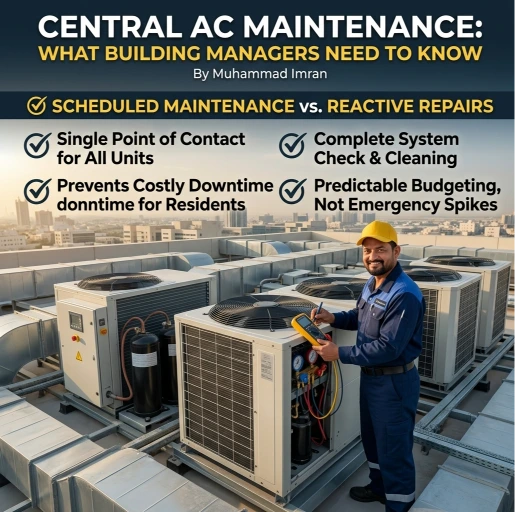
Quick answer: Managing central AC across a multi-unit building means downtime affects more than one household. A scheduled maintenance plan with a single point of contact prevents the reactive, one-emergency-at-a-time pattern that costs more over a year than planned servicing.
Why Reactive Repairs Cost More Over Time
Waiting for a unit to fail before servicing it means emergency callout timing, tenant complaints, and often a more expensive repair than a routine service visit would have caught early. A coil that’s cleaned annually rarely reaches the point of forcing the compressor into failure — a coil that’s never inspected eventually does.
One Contact, Consistent Pricing
Handling each unit’s AC issue as a separate call, possibly with different technicians and inconsistent pricing, makes budgeting difficult. A single maintenance contract covering the whole property gives predictable annual cost and one technician team who already knows the building’s systems.
Priority Response Matters for Occupied Buildings
A no-cooling emergency in a residential building affects tenants immediately, especially in Bahrain’s summer. Contract customers get priority scheduling over one-off calls, which matters when a building manager needs a fast response, not a queue position.
See our AC Maintenance Contract page for commercial and multi-unit pricing, from 60 BHD.